Founded by two ex-Palantir engineers, the startup aims to bring AI-platform power to small-business healthcare benefits
European midmarket firm Vitruvian Partners is leading a $600 million investment in Angle Health, an AI-based health-tech startup founded by two former Palantir Technologies engineers to expedite healthcare benefits for small businesses.
Expected to close later this month, the deal values Angle Health at $2.7 billion, more than doubling the startup’s December valuation, when fintech investor Portage Ventures led a $134 million investment in the company.

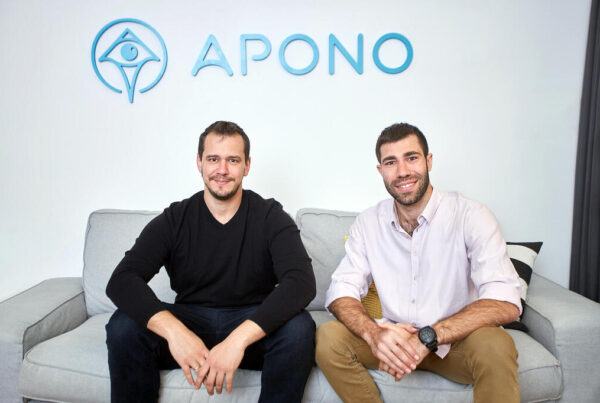
Ty Wang, co-founder and chief executive of Angle Health. Photo: Emma Wernsdorfer
Other backers of the latest transaction include new investor Town Hall Ventures—a healthcare firm co-founded by Andy Slavitt, who held health policy roles in the Biden and Obama administrations—and existing investors Blumberg Capital, Portage, PruVen Capital and Y Combinator. The investment includes a $200 million equity investment in Angle Health and a $400 million secondary transaction at a $2.5 billion valuation that provides substantial liquidity to the startup’s early backers.
Chief Executive Ty Wang and Chief Technology Officer Anirban Gangopadhyay founded Angle Health in 2019 to address what they saw as the biggest problem in the American healthcare system: the lack of access to healthcare options that employees at small businesses face compared with their peers at larger organizations or highflying tech companies.
The two met as high-school students while participating in the U.S. government’s Stokes Educational Scholarship program, which provides college funding and work experience to students who want to build careers in national security. They later worked together at Palantir.
San Francisco-based Angle Health aims to multiply healthcare offerings for small businesses by helping them find lower-cost care options, such as at-home infusions and free-standing imaging centers, for example—rather than hospital-based services—as well as international prescription sourcing. The company’s AI-powered platform, much like a traffic cop or an orchestra conductor, synchronizes the coverage by steering small businesses to the most appropriate offering or location at the right time.
“We did not set out to build another health insurance company,” Wang said. “What we set out to do was really rebuild the building blocks and the infrastructure so that people can actually access the care that they need, when they need it, and in a way that stops this kind of death spiral of cost within our healthcare system.”
It’s the smaller businesses that historically have seen the highest cost increases while also having the fewest healthcare options, said Jeremy Gelber, the Vitruvian partner who led the firm’s investment. Angle Health gives those smaller employers choices, allowing them to customize benefit packages, he said. “Because of AI, they’re able to manage thousands of different designs,” he added.
U.S. employers face a projected 11.1% increase in healthcare costs in 2027, the steepest projected single-year rise in more than two decades, according to consulting firm WTW. But the median premium increases among Angle Health’s renewing customers range from just 5% to 7%, Wang said, a span he expects to hold in 2027.
That cost control, Gelber said, shows how Angle Health’s AI-driven underwriting works: It’s not just that Angle Health can offer attractive rates to lure in new business, but that when renewal time comes, it’s able to show that the numbers held and it managed expenses to curb cost increases, he said.
The company started doing business in 2021 and is already profitable on a net-income basis, with revenue and employer customer count in the most recent year more than doubling on a year-over-year basis. It oversees nearly $1 billion of annual premium equivalents, a common measure of healthcare spending, for more than 5,000 small businesses, from restaurants and coffee shops to construction companies and car shops. Some of those businesses have as few as two employees, Wang and Gangopadhyay said.

Anirban Gangopadhyay, co-founder and chief technology officer at Angle Health. Photo: Danny Gabriel
Angle Health wasn’t looking to raise money, as it had little debt and was already growing at a healthy pace, Wang said. But Vitruvian proved a good fit for the company’s growth plans.
An investor behind such companies as virtual physical-therapy company Hinge Health, Vitruvian has a proven record of growing companies that combine healthcare, tech and finance—areas Angle Health is focusing on, Wang and Gangopadhyay said.
Gangopadhyay said Angle Health continues to expand beyond health plans and benefits administration.
“The vision for Angle was, and still is, how do we revolutionize that end-to-end healthcare experience, not just the benefits side, but the healthcare economics, the access and ultimately the underlying health of a member?” he said.